The Background of Purchasing a Manual Espresso Maker#
I own a capsule coffee machine that I bought around three years ago.
I remember it cost about $100 at the time, which seemed quite reasonable,
so I’ve been quite satisfied with its value for money.
However, at some point, the capsule coffee machine started acting up.
When I try to make coffee, it works for about three seconds and then stops.
It seems to be broken.
I guess it’s time since I’ve probably used it to make over 500 capsules.
I debated whether to get it serviced or buy a new one.
It would be cheaper to receive after-sales service, but one concern I have is about hygiene.
Although I’ve always run water through it before and after making coffee,
there must be scale buildup in the connecting passages from the water tank to the coffee outlet.
I’ve never completely disassembled the machine to thoroughly clean the liquid pathways with a brush.
This led me to become curious about the principles and internal structure of espresso machines.
After researching online, I realized that the structure isn’t simple at all.
The devices and mechanisms to create the appropriate pressure turned out to be quite profound.
I realized that the taste of coffee that has evolved over hundreds of years didn’t just happen by chance.
Now I slightly understand why there are coffee machines that cost $1,000 or more.
No matter how expensive a coffee machine is, and even if it has an automatic cleaning function,
it seems it can’t clean the water paths as thoroughly as brushing them.
Moreover, the complexity of the structure makes it daunting to think about disassembling and cleaning it myself.
So, I looked for an espresso machine that isn’t complex and is easy to disassemble and clean.
Oh!! I discovered that there are manual espresso makers.
They use the principle of a lever to manually create pressure.
It looked very simple in the pictures.
However, even the cheaper manual espresso makers were over $130 and some were over $1,000.
They are apparently professional-grade, used by baristas, although I still don’t quite understand it.
The structure seemed so simple that even a low-end model costing over $130 seemed expensive to me.
But, prioritizing hygiene, I couldn’t find any other option, so I bought one with mixed feelings.
I wonder if this espresso maker will satisfy me.
I’m curious as the product is on its way.
Manual Espresso Maker Review#
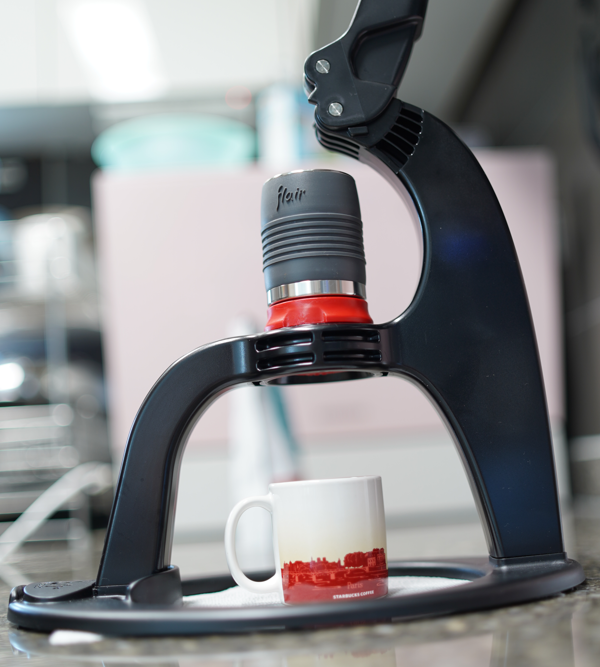
I purchased a manual espresso maker called the Flair Neo Flex.
Since the purchase, I’ve made and enjoyed more than 20 cups of coffee with it.
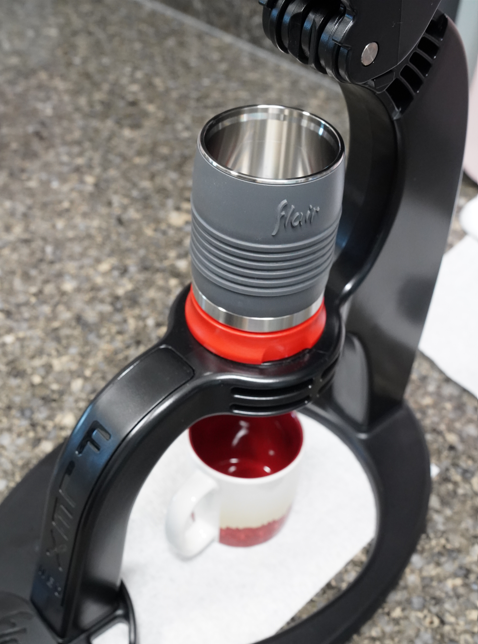
To get to the point — I’m thoroughly satisfied.
There are two reasons.
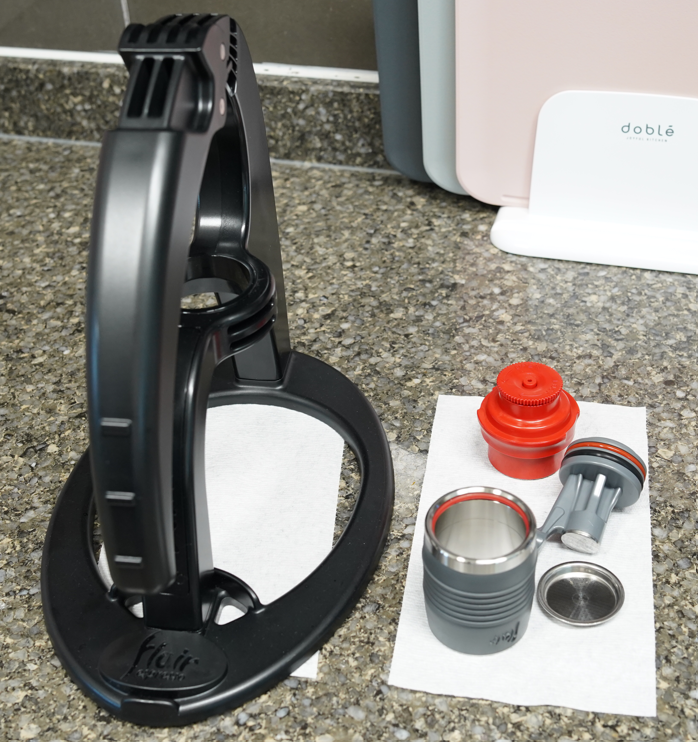
First, it is hygienic because it can be fully disassembled and cleaned.
Since hygiene was the very reason I bought a manual espresso maker,
being able to disassemble and clean it means I have no concerns about hygiene.
The one downside is that there are quite a few parts to take apart and wash, which is a bit tedious.
Second, the coffee tastes great.
The coffee tastes significantly better than the low-cost capsule machine I used before.
I originally bought a manual espresso maker for hygiene reasons, but I’m even more satisfied with the taste.

I now understand why specialty coffee shops with baristas use manual espresso makers.
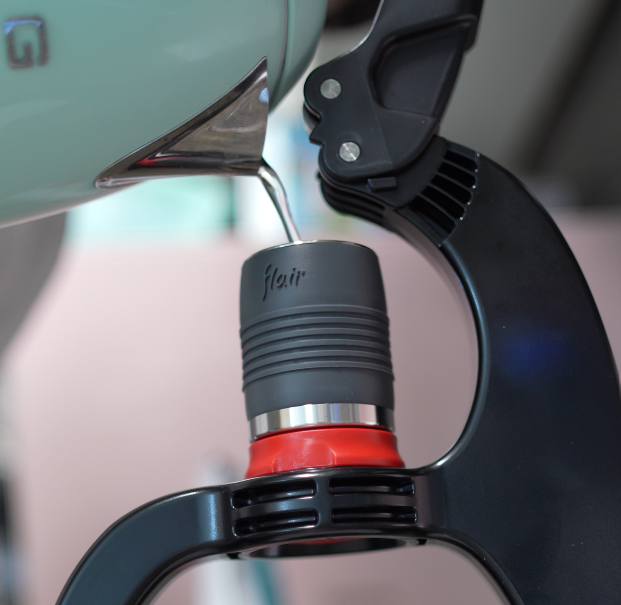
You can also vary the flavor by manually controlling the extraction pressure.
I’d heard that pressure is important for pulling an espresso shot,
but actually experiencing how taste changes with pressure during extraction revealed a surprisingly large difference.
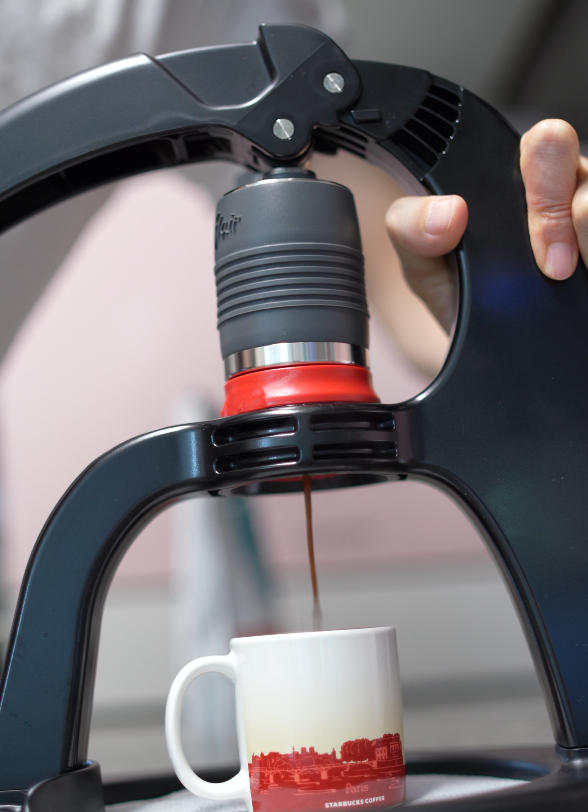
At low pressure, the flavor gets closer to something like cold brew (Dutch coffee),
and pulling at around 9–15 bar gives a true espresso flavor.
It’s fascinating.
Being able to vary the flavor by directly controlling pressure is genuinely fun.
Although I bought this manual espresso maker with mixed feelings, I’m using it with greater satisfaction than expected.